


How Can a Small Business in London Improve Its SEO and Dominate Local Search?
This is one of the most important questions every local entrepreneur must ask in today’s digital-first world. With over 90% of consumers searching online for products and services, and with London being one of the most competitive business markets in Europe, strong search engine visibility is essential for small businesses to survive and thrive.
In this detailed guide, we’ll explore how can a small business in London improve its SEO using proven strategies that are simple to implement but powerful in results. Whether you’re a café in Camden, a florist in Fulham, or a startup in Shoreditch, this guide is for you.
How can a small business in London improve its SEO with Google Business Profile?
How can a small business in London improve its SEO using Google Business Profile? Your Google Business Profile (formerly Google My Business) is often the first impression customers get of your business. It appears on the right-hand panel of Google Search and in Google Maps—prime real estate for local exposure.
Here’s how to fully optimize it:
Complete all information: Business name, address, phone number, website, hours, services.
Add high-resolution photos of your premises, team, and products.
Choose relevant business categories.
Regularly post updates, offers, or events.
Most importantly, ask satisfied customers to leave reviews and always respond to them.
This not only improves your local SEO but also builds trust with potential customers.
👉 Official Google Business Profile Guide
How can a small business in London improve its SEO through local keyword research?
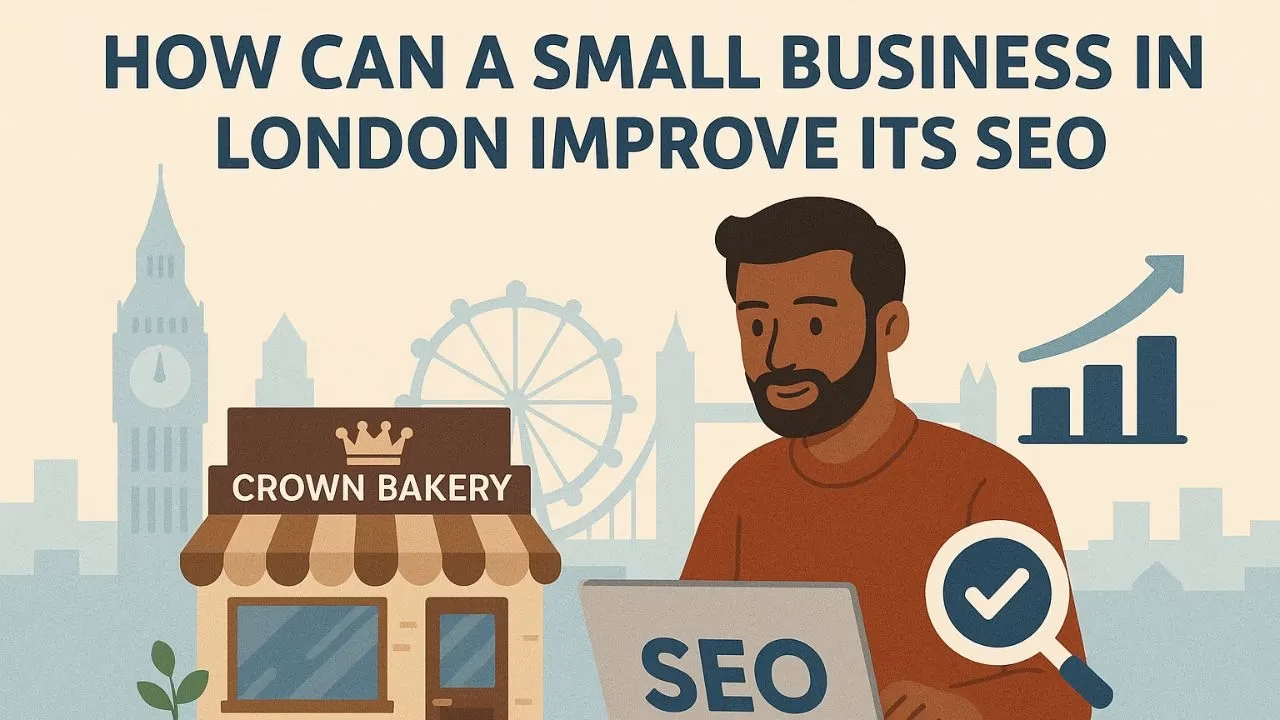

How can a small business in London improve its SEO with the right keywords? Keywords are the foundation of SEO. But instead of targeting global terms, focus on location-specific long-tail keywords that match local search intent.
For example:
Instead of “Italian restaurant,” go for “Italian restaurant in Notting Hill.”
Instead of “emergency plumber,” try “24/7 emergency plumber in South London.”
Use keyword research tools like:
Once you’ve found relevant local keywords, include them naturally in:
Page titles and meta descriptions
Headers and subheadings
Page content and image alt text
Your URL structure (e.g., www.yourbusiness.co.uk/london-plumbing)
Proper keyword optimization ensures that your content matches what people in London are actually searching for.
How can a small business in London improve its SEO by creating local content?
How can a small business in London improve its SEO by producing valuable content? Content is still one of the most effective ways to improve SEO rankings, drive organic traffic, and keep users engaged.
Your content strategy should be tailored to local relevance. Some ideas include:
Blog posts like “5 Best-Selling Items in Our Soho Gift Shop This Summer”
Location landing pages for different branches or services across boroughs
Articles on local news, trends, or upcoming events that connect to your business
How-to guides or tips that relate to your niche and help local customers
To help visitors navigate your website, add internal links to product and service pages. See Moz’s Local Content Strategy Guide for more information.
How can a small business in London improve its SEO with technical and mobile optimization?
How can a small business in London improve its SEO by improving technical performance? Websites that are mobile-friendly, quick, and secure are given higher rankings by search engines like Google.
Here’s a quick checklist:
Use a mobile-responsive design so your website looks great on all devices.
Utilizing browser caching and compressing images will speed up the loading process.
Use HTTPS to make your website secure.
Fix broken links and errors with tools like Google Search Console
Optimize images using descriptive file names and alt tags
You can analyze your website’s speed and mobile usability with PageSpeed Insights.
A fast, user-friendly website leads to longer visits, lower bounce rates, and better rankings.
How can citations and backlinks help a London-based small business improve its SEO? Google views backlinks—links to your website from other websites—as votes of confidence. Your SEO ranking rises in proportion to the credibility of the links.
For small local businesses, local backlinks are gold. Here’s how to get them:
In directories like Scoot, Thomson Local, and Yell, you can list your business.
Reach out to local bloggers or newspapers for features
Partner with nearby businesses and ask for reciprocal links
Sponsor a local event or charity and request a backlink from their site
Also, ensure your NAP (Name, Address, Phone number) is consistent across all citations and directories. This boosts local trust signals.
👉 Check out Backlinko’s guide to link building for detailed strategies.
How can a small business in London improve its SEO by tracking and adjusting regularly?
How can a small business in London improve its SEO in the long term? SEO isn’t a one-time task—it’s an ongoing process. You need to track your performance and refine your strategy based on data.
Use tools like:
Google Analytics
Google Search Console
SEMrush or Ahrefs
Track important metrics such as:
Organic traffic
Keyword rankings
Bounce rate
Click-through rates (CTR)
Backlink growth
If something isn’t working (e.g., a blog not getting traffic or a page not ranking), adjust your keywords, improve content, or enhance user experience.
Final thoughts: How can a small business in London improve its SEO effectively?
So, how can a small business in London improve its SEO in a competitive market like London? It requires a balanced approach that combines:
Local keyword targeting
Google Business optimization
High-quality local content
Mobile and technical SEO improvements
Link building and directory citations
Continuous tracking and improvement
When done right, SEO becomes one of the most cost-effective marketing channels, helping your small business attract local customers, beat larger competitors, and build a lasting online presence.
For more expert resources, check out Google’s SEO Starter Guide.