Valid Passport
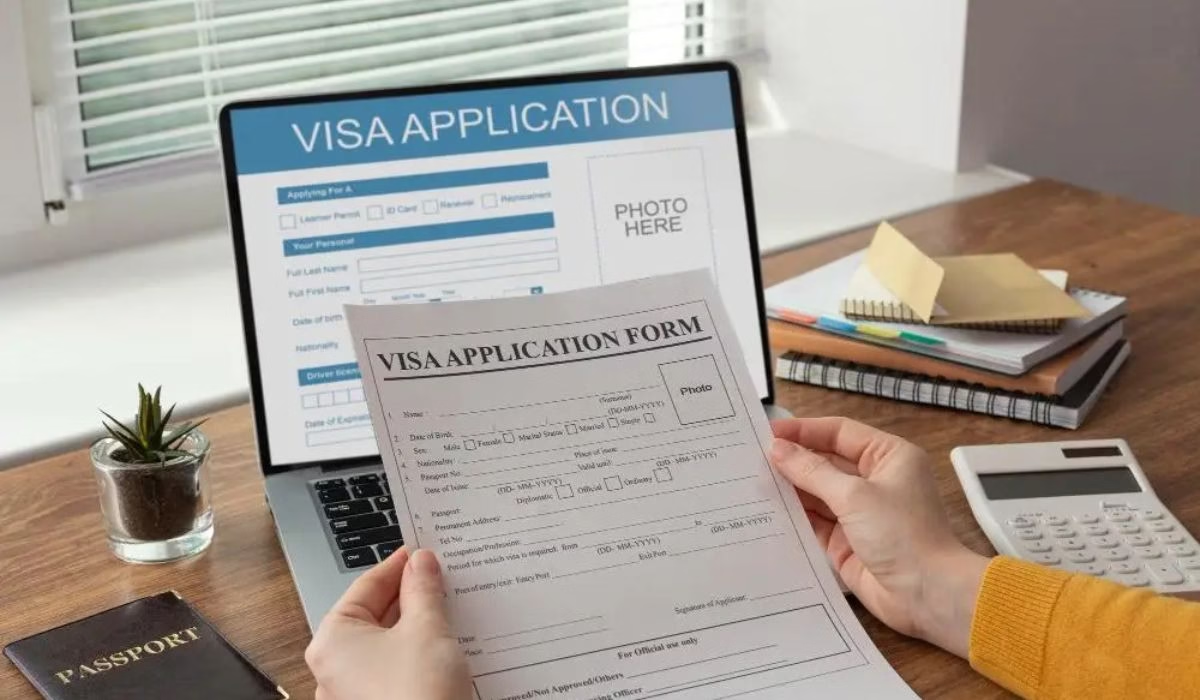
Your initial requirement is your passport. It reveals your origins and defines who you are. It has to be current for at least six months following your intended stay. Some countries demand much longer validity. Look for empty pages for visa stamps. Immediate denial results from a damaged or out-of-date passport. Bring a second copy always. This little action keeps your application on track and prevents last-minute panic.
Acceptance Letter From the Institution
There is no visa without evidence of study. Your selected college or university will send you an official acceptance letter to confirm your place. Your course’s name, duration, and starting date should be included here. Certain embassies also verify the acknowledgement of the institution. Preserve copies both electronically and physically. Should your acceptance be conditional, specify the criteria that have to be met. Your study goal is verified in the letter; therefore, it is the foundation of your application.
Evidence of Funds
Visa officials must be satisfied with your financial support for your education. Financial stability is evident in bank statements, scholarship letters, and sponsorship papers. Monthly living expenses, tuition fees, and transportation costs have to be covered. Some nations demand a specific minimum balance for many months. Clear documentation calms the authorities that financial difficulty will not affect you. Avoid late fund transfers; they could arouse doubt. Your application is greatly improved by a crisp financial history.
Transcripts and Academic Certificates
One’s educational background is important. To show your qualifications, schools and colleges offer transcripts, certificates, and diplomas. Include translated if necessary. Officials verify your eligibility for course prerequisites. Emphasise important successes or pertinent coursework. Delays can result from incomplete records. Well-organised, correct papers make a powerful statement and demonstrate your seriousness about education.
English Fluency Test Results
Normally, you need evidence of language competence if your course is in English. IELTS, TOEFL, or PTE are among the most often used exams. Usually, two years provide scores within validity periods. Good outcomes show willingness to manage coursework. Retesting may be necessary for low or expired marks. Check embassy regulations even if your school was in English. Good language evidence removes pointless obstacles.
Passport-Size Images
Though little, photographs have to meet embassy requirements. Generally, modern photographs with clear backgrounds are needed. Some embassies want physical prints; others call for digital copies. Look at head posture, format, and size. Applications might be held up by incorrect images. Keep applications, licenses, and ID cards at hand; they could all ask for extras. Though it appears insignificant, paying attention to detail matters.
Statement of Purpose
A personal statement clarifies why you wish to attend university and why in that nation. Maintain focus, honesty, and brevity. Explain your academic objectives, professional ideas, and justifications for picking your institution and course. Stay clear of platitudes. Show recognition of intellectual and cultural variations. A well-written declaration proves your honesty to visa officials. It is your voice in the application, rather than just papers.
Additional Supporting Documents
Extra verification is needed by some nations. This could include accommodation plans, travel insurance, police clearance, or medical certificates. Search the websites of embassies thoroughly. If applying for graduate studies, include any recommendations or research proposals. Customising your papers to specifications helps to avoid slowdowns. Always carry duplicates, arrange documents logically, and label them clearly. These added benefits show responsibility and readiness.
Conclusion
Planning, organisation, and careful attention to detail define a successful UK study visa application. From your financial records to your passport, every paper has a chapter to say about you. The quickest rejection route is missing or incomplete paperwork. Early collection of academic transcripts, language test results, personal statements, and supplementary papers helps to simplify the process. Retain duplicates of everything and check Embassy requirements. Studying abroad is fantastic, but it begins with a strong, full application. Good paperwork displays readiness, accountability, and dedication—attributes that isa officials seek. The route to your ideal course opens much more quickly and takes less tension when you achieve it correctly.
Also, read: